
How to harmonize your dining room table with Feng Shui decor?
Key points of the article
- Feng Shui aims to encourage the smooth circulation of Chi throughout the dining room, creating a space that promotes togetherness, balance and conviviality.
- Choose a wooden dining table, ideally round or oval, along with soft colours and natural materials to enhance the harmony of the room.
- The layout should provide sufficient space around the table (at least 80 cm / 31 inches of clearance) and ensure that everyone seated feels comfortable and secure.
- Thoughtfully planned lighting, houseplants, mirrors and uncluttered décor all help strengthen positive energy and create a calm, welcoming atmosphere for everyday life.
Updated on
Harmonising your dining table with Feng Shui décor can transform your dining area into a welcoming and harmonious space. By applying Feng Shui principles, you can create a balanced atmosphere that encourages enjoyable meals with family and friends. Feng Shui is an ancient Chinese philosophy based on the idea that life energy, known as Chi, flows through every living space. When this energy is properly guided, it promotes well-being, prosperity and harmonious relationships. In this guide, we'll walk you through the essential steps to incorporate Feng Shui into your dining room and maximise positive energy throughout the space.
Understanding the principles of Feng Shui in the dining room
Before getting started, it's important to understand the fundamentals of Feng Shui. At its core is the flow of energy, known as Chi, which should circulate freely throughout your home. A Feng Shui dining room is a place where positive energy naturally gathers, creating a calm, welcoming atmosphere. When Chi becomes blocked or stagnant, it can lead to tension and a feeling of discomfort.
The location of the dining room also plays an important role. Ideally, it should be positioned close to the kitchen, symbolising the natural continuity between food preparation and shared meals while making serving more practical. The dining room should not be directly visible from the front door, as this allows positive energy to escape too quickly upon entering the home. Likewise, avoid positioning the dining room beneath a bathroom, as this is believed to weaken positive energy.
In modern open-plan interiors where the dining area shares space with the living room, you can visually define the dining zone without adding partitions. A rug, a dedicated pendant light or the arrangement of the dining chairs can clearly distinguish the eating area. This visual separation helps anchor the Chi within the dining space and energetically separates it from the rest of the room.
Choosing Feng Shui materials and colours for your dining table
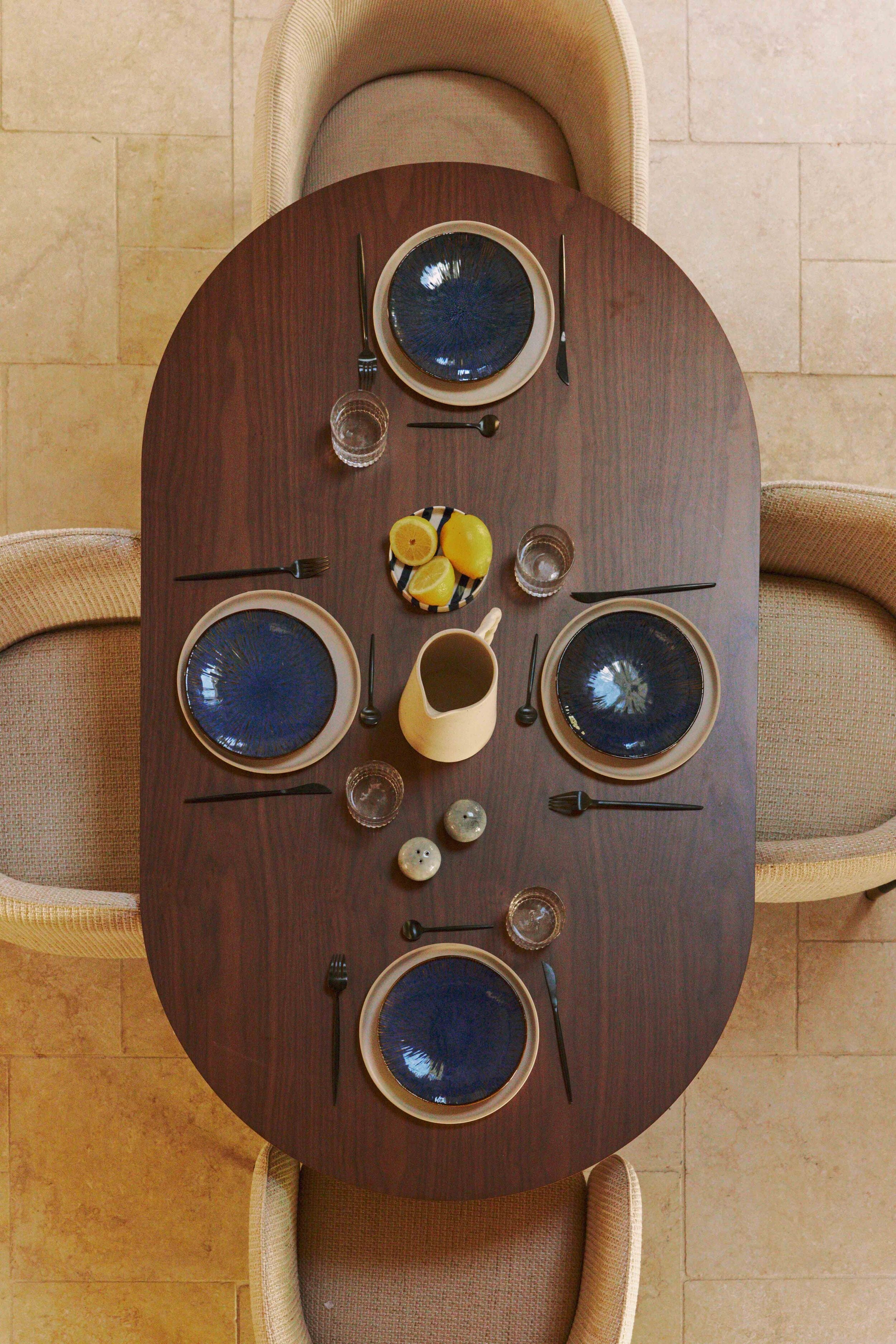
The choice of materials and colours is essential when creating a Feng Shui dining room. Natural materials such as wood are highly recommended because they symbolise growth and vitality. A solid wood dining table—especially one made from oak or walnut—adds warmth and authenticity while strengthening positive energy. Wood is a living material that remains closely connected to nature, helping to create a calming atmosphere.
For colours, choose soft, balanced shades. Earth tones such as beige, brown and warm yellow are ideal because they represent stability and comfort. These colours create a soothing environment that's perfect for family meals and conversation. For example, a cream tablecloth or light brown napkins can introduce subtle Feng Shui influences while maintaining an elegant look.
The shape of the dining table is equally important. Feng Shui generally favours round or oval tables, as they encourage the smooth circulation of energy and avoid the "poison arrows" created by sharp corners. A round dining table is particularly well suited to a Feng Shui dining room because it places every guest on equal footing and naturally encourages conversation. If you choose a rectangular dining table, opt for rounded corners whenever possible and leave sufficient space around the table for easy movement. Glass tabletops are generally discouraged because they can create a feeling of visual and energetic instability that detracts from a calm dining atmosphere.
The ideal furniture layout according to Feng Shui
Furniture placement is another key aspect of Feng Shui. The dining table should be positioned so that everyone seated can see the room—and ideally the entrance—without sitting directly opposite the door. This creates a sense of security and comfort, allowing guests to relax while supporting a healthy flow of Chi.
Avoid placing the dining table directly against a wall or immediately beside a window, as this may obstruct the movement of energy. If space allows, position the table in the centre of the room. An even number of chairs is recommended to encourage balance and harmony. For example, a round table with six chairs creates perfect symmetry while promoting communication and equality among guests.
Allow at least 80 cm (31 inches) of clearance around the table so Chi can circulate freely. Chairs should be able to slide back without hitting a wall or other furniture. This recommendation becomes particularly important for dining tables seating six people or more, so be sure to consider your room dimensions before selecting the table size.
Decorative elements for a successful Feng Shui dining room
To complete the harmony of your dining room, choosing the right decorative elements is essential. Mirrors are among the most valuable Feng Shui accessories because they reflect both light and energy, visually enlarging the room while symbolising abundance. Hang a mirror so that it reflects the dining table to reinforce this sense of prosperity. A large mirror with a wooden frame also adds warmth and elegance.
Houseplants are another excellent choice, bringing nature indoors while purifying the air. Select plants with soft, rounded leaves—such as pothos or jade plants—which are believed to encourage positive energy. Plants with pointed or spiky leaves, such as cacti, should be avoided because they are thought to create disruptive energy. Fresh flowers displayed in a vase at the centre of the table symbolise beauty, growth and fulfilment.
Decorative objects also carry symbolic meaning. Rounded shapes represent harmony and unity, making bowls and curved vases particularly appropriate. Avoid objects with aggressive forms or sharp angles that could generate negative energy. For practical inspiration, explore our guide on how to decorate your dining table in harmony with Feng Shui, featuring styling ideas suitable for every interior style.
The importance of lighting in a Feng Shui dining room
Lighting plays a crucial role in creating a harmonious dining room according to Feng Shui principles. Good lighting should be both functional and soothing. Ideally, the room should feature multiple light sources to create a balanced atmosphere. A soft central light—such as a chandelier or pendant light made of glass or crystal—provides warm, welcoming illumination across the dining table.
Complement this with table lamps or wall sconces to introduce additional layers of light and eliminate dark corners, which may disrupt the flow of Chi. Dimmable lighting is particularly valuable, allowing you to adjust the ambience to suit different occasions. Candles are another excellent choice for intimate dinners, as their soft, natural glow promotes relaxation and togetherness.
The position of the chandelier or pendant light is equally important. It should be centred above the dining table and hung 70 to 90 cm (28 to 35 inches) above the tabletop. This creates an intimate atmosphere without obstructing guests' view of one another. According to Feng Shui, a light hung too high creates emotional distance between diners, while one that hangs too low can make the space feel oppressive and hinder the circulation of Chi.
Incorporating the Five Elements for perfect balance
According to Feng Shui, integrating the Five Elements—Wood, Fire, Earth, Metal and Water—creates a balanced and harmonious environment. Each element can be represented naturally and elegantly within your dining room.
| Element | Associated colour | Material | Practical example | Effect |
| Wood | Green, soft blue | Wood, bamboo | Walnut dining table, houseplants | Growth, vitality |
| Fire | Red, orange, pink | Candles | Candlesticks, candles | Warmth, sociability, appetite |
| Earth | Beige, yellow, brown | Ceramic, stone | Stoneware tableware, vases | Stability, grounding |
| Metal | White, grey, gold | Metal, brass | Cutlery, brass table base | Clarity, precision |
| Water | Soft black, deep blue | Glass, mirrors | Indoor fountain, mirror, aquarium | Calm, serenity |
An indoor fountain or aquarium can introduce the Water element, bringing calmness and tranquillity into the room. Make sure the water remains clean and moving to prevent stagnant energy. The Wood element is naturally represented by your furniture and can be reinforced with bamboo accessories or natural wooden frames. Walnut dining tables are particularly strong expressions of the Wood element thanks to their rich natural grain and warm tones.
Encouraging healthy air circulation for revitalised Chi
Good air circulation is essential for maintaining vibrant Chi in a Feng Shui dining room. Ensure the space is well ventilated by opening the windows regularly to allow fresh air in and stagnant energy to flow out.
Air purifiers and essential oil diffusers can also help maintain a fresh, energising atmosphere. Essential oils such as lavender, eucalyptus and lemon are excellent choices for purifying the air while introducing a subtle natural fragrance. Air-purifying houseplants, including English ivy and spider plants, are also beneficial for filtering indoor pollutants.
Keeping your dining room clutter-free
Cleanliness and organisation are fundamental principles of Feng Shui. A tidy dining room allows Chi to circulate freely, creating a calm and welcoming environment. Avoid leaving unnecessary objects on the dining table and keep the floor free from clutter.
Smart storage solutions help keep everyday items organised and out of sight. Sideboards with cupboards or drawers are ideal for storing tableware, serving accessories and decorative objects when they are not in use.
The symbolism of decorative items also deserves careful attention. Artwork should depict nature, abundance or peaceful landscapes. Avoid images that convey aggression, loneliness or conflict, as these may introduce disruptive energy into a room dedicated to sharing meals and spending time together. To create an even more harmonious dining area, explore our guide on how to match your dining table and chairs, where you'll find additional advice on achieving complete visual and energetic balance.
-
-
-
-
-
Temba
Extendable dining table, for 6-8 people, Ash wood with walnut stain, L154-230
Standard price 1 499€ -
-
-
-
-
-
-
-
-



See also
See all articles- /en-nl/blogs/tijdschrift/our-top-5-best-sofas
- /en-nl/blogs/tijdschrift/meilleur-canape-convertible
- /en-nl/blogs/tijdschrift/decoration-avec-canape-vert


